
“Homeowners who have exited forbearance and been able to take up their original payment again are performing at almost the same rate as the overall mortgage servicing portfolio.”
–Mike Fratantoni, MBA Senior Vice President and Chief Economist.

“Homeowners who have exited forbearance and been able to take up their original payment again are performing at almost the same rate as the overall mortgage servicing portfolio.”
–Mike Fratantoni, MBA Senior Vice President and Chief Economist.
MBA NewsLink recently posed questions about the LOS space to JP Kelly, president and co-founder of OpenClose, a West Palm Beach, Fla. multi-channel, end-to-end LOS and mortgage technology provider.
To determine what products, programs and services are needed to address their most urgent pain points, WFG asked its customers and colleagues.
There are no easy answers to be found for legacy banks and those looking to grow their presence in the broader mortgage market, but the clue perhaps lies in the friction involved in existing mortgage processes.
Bill Belichick, one of the most successful coaches in professional football history, once said a team is “not the strength of the individual players, but it is the strength of the unit and how they all function together.” Such wisdom surely resonates with many business leaders in our industry. But how well do they live by it?
Soaring home prices and raging demand will not be enough to slow the housing train. In fact, they may actually help it.

On Wednesday, Fannie Mae and Freddie Mac published a lender letter and bulletin, respectively, providing more details on the new refinancing option for low-income borrowers announced last week by FHFA. Also last week, FHFA announced finalization of a proposed rule that would require the GSEs to develop resolution plans, or “living wills.”

ICE Mortgage Technology, Pleasanton, Calif., said purchase activity among millennials increased in March, even as interest rates rose for the first time in six months.
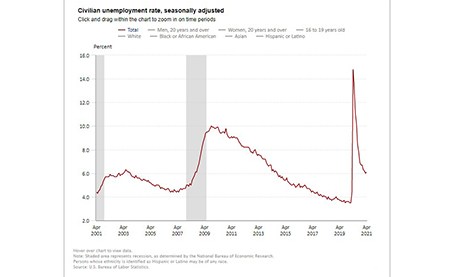
In the days ahead of last Friday’s employment report from the Bureau of Labor Statistics, prognosticators went big, with consensus anticipating nearly one million new April jobs and even one economist confidently predicting 2.1 million new jobs. Alas, nearly everyone was wrong.

The U.S. industrial market “shows no signs of slowing down,” with record-high asking rents and development activity and low vacancy levels, reported CBRE, Dallas.