

Advocacy Update: House Offers Amendments to Senate Housing Package; Kevin Warsh Confirmed as Fed Chair; MBA Responds to FSOC Proposed Guidance
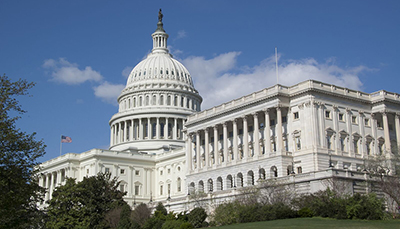
MBA Indicates Support for New Bipartisan House Amendment to Senate Housing Package
MBA, through a press statement by MBA President and CEO Bob Broeksmit, CMB, announced its support for the legislative text (now public) negotiated as a House alternative to the most current Senate passed version of the 21st Century ROAD to Housing Act (H.R. 6644, as amended).
• The deal – agreed to by House Financial Services Committee Chairman French Hill (R-AR) and Ranking Member Maxine Waters (D-CA) – incorporates key feedback from MBA and other industry stakeholders – strengthening the bipartisan package.
• Read Bob’s full statement here.
Why it matters: Broeksmit’s statement also highlights support for key revisions within the newly-revealed text that address MBA’s previously expressed concerns about the negative impacts of the March-passed Senate language (if enacted) on rental housing capital flows and FHA multifamily loan limits.
Go deeper: The new Hill/Waters package also softens single-family FHA disclosure form requirements intended to heighten awareness of home loan program options for veterans – and preserves prior refinements/improvements to provisions sought by MBA that appropriately reform the USDA/RHS home loan program and codify the GSEs’ reconsideration of value (ROV) appraisal processes.
• MBA is also tracking language in the bill requiring “first look” programs for owner-occupants or HUD-qualified non-profits be offered by servicers on their real-estate-owned properties in order to be excluded from the definition of institutional investor.
What’s next: Although the bipartisan Hill/Waters package is expected to receive a House floor vote as early as next Wednesday, discussions remain fluid with House and Senate leaders and key White House officials. MBA staff is preparing timely updates to ensure that its members are fully equipped to help encourage the House to advance this new compromise. We will share additional guidance – and a revised MAA Call to Action – as events warrant in the coming days.
For more information, please contact Rachel Kelley at (202) 557-2816, Madisyn Rhone at (202) 557-2741, George Rogers at (202) 557-2797, or Jeremy Green at (202) 557-2849.
MBA Responds to FSOC’s Proposed Guidance on Nonbank Financial Company Designations
On Wednesday, MBA responded to the Financial Stability Oversight Council’s (FSOC’s) proposed interpretive guidance on nonbank financial company designations. MBA also participated in a joint trades letter.
Go deeper: FSOC’s proposed guidance outlines the steps FSOC would take to determine whether to designate a nonbank financial company for Federal Reserve supervision due to concerns about possible systemic risk. The updated policy reinstitutes many of the elements of FSOC’s 2019 interpretive guidance, including the activities-based approach and the cost-benefit analysis.
• Both MBA and the joint trades letter expressed broad support for the proposed guidance.
Why it matters: The proposed guidance incorporates many of the prior recommendations MBA has made for FSOC to appropriately set the bar high for designation.
• MBA highlighted additional ways FSOC could further refine and improve the proposed guidance to ensure designation is only used when appropriate, such removing “asset valuation” as a separate vulnerability; factoring in the likelihood of a shock’s impact reaching a high enough level to cause significant damage to the broader U.S. economy; considering the suitability of Federal Reserve prudential supervision and the substitutability between firms in the costs and benefits of designation; and factoring in how subsequent regulatory changes would have affected historical examples of material financial distress.
What’s next: MBA will track FSOC’s release of the final guidance.
For more information, please contact Kait Hildner at (202) 557-2933.
Senate Confirms Kevin Warsh as Federal Reserve Chairman
On Wednesday, the full Senate confirmed The Honorable Kevin Warsh to be Chair of the Board of Governors of the Federal Reserve System (“the Fed”) by a vote of 54-45.
Separately, the Senate confirmed Warsh on Tuesday for a 14-year term on the Fed Board by a vote of 51-45 (the difference in the votes was due to the absence of certain specific Senators). Warsh formerly served on the Fed Board from 2006 to 2011.
What they’re saying: MBA’s Broeksmit in a press statement said, “We look forward to continued engagement on policies affecting the banking and housing finance systems and will continue advocating for a more balanced and risk-aligned approach to capital standards affecting mortgage lending and commercial real estate finance. This includes our recommendations on the Basel III re-proposal, which will include reducing the risk weight on mortgage servicing assets to 100% and eliminating their cap included in Tier 1 capital, reducing the risk weight to 50% on warehouse lending lines, and better calibrating capital requirements for commercial and multifamily real estate lending and community investment activities.”
Why it matters: Warsh becomes Fed Chair at a time when inflation is on the rise, which may make rate cuts more difficult. The Fed is also engaged in numerous regulatory matters, such as the Basel III re-proposal.
Go deeper: During his nomination hearing, Warsh testified that an expanded Fed balance sheet distorts markets, favors financial assets, and weakens the Fed’s credibility. He supports gradually reducing the balance sheet and returning to interest rates as the primary policy tool to better serve the dual mandate of price stability and maximum employment.
• Warsh also stated that he has no fixed target for the balance sheet and emphasized that any reduction would require public, rigorous deliberation over time. Warsh also said that increasing the Fed’s balance sheet should be limited to crises.
For more information, please contact George Rogers at (202) 557-2797 or Jeremy Green at 202-557-2849.
Secretary Turner Talks HUD Funding at House and Senate Hearings
On Tuesday and Thursday, HUD Secretary Scott Turner testified in support of President Trump’s request for FY27 Transportation and Housing and Urban Development (“T-HUD”) appropriations. The hearings before the House and Senate panels displayed predictable partisan divides – but also addressed certain key issues of interest to our industry.
• A summary of the House hearing can be found here, and the Senate hearing can be found here. The House hearing transcript is here, and the Senate can be found here.
Go deeper: As expected, key members of both subcommittees underscored the importance of increased housing supply and affordability.
At the Senate hearing, Senator Capito (R-WV) asked several relevant questions, including: “Within your existing authority, without new legislation . . . are there changes, maybe three changes that you could implement in the next twelve months to make FHA multifamily financing faster, simpler, and less costly.”
She also discussed the liquidity constraints faced by single-family servicers and asked what constraints there are for FHA reimbursing servicers more promptly for the outstanding taxes and insurance advances associated with insured loans.
• Of note at the House hearing, full Appropriations Committee Ranking Member DeLauro (D-CT) said, “[T]he Trump administration is adding pressure [onto] American families from all sides. They are pushing costs up through tariffs and pulling back aid through cuts. It is the worst of both worlds.”
What’s next: As is customary, Secretary Turner provided real-time responses to the questions he faced from both Senators and Representatives. He frequently offered for HUD to provide more-detailed responses in writing to certain specific questions he received.
• MBA will be checking with pertinent staff to review any responses to “Questions for the Record” that Turner may receive from elected officials in the coming days.
• The FY27 Fiscal Year begins on October 1, 2026. As HUD appropriations continue to be discussed, MBA will strongly advocate for the industry’s interests, including possible “report language” on policy matters – in addition to calling for appropriate HUD funding levels – as the appropriations process unfolds.
For more information, please contact Rachel Kelley at (202) 557-2816, Madisyn Rhone at (202) 557-2741, George Rogers at (202) 557-2797, or Jeremy Green at (202) 557-2849.
Former CFPB Director Rohit Chopra Appointed to New California Consumer Protection Agency
On Tuesday, California Governor Gavin Newsom announced the appointment of former Consumer Financial Protection Bureau (CFPB) Director Rohit Chopra to lead California’s new Business and Consumer Services Agency, which launches on July 1, 2026.
• The new agency, announced last summer, is part of a larger reorganization that split the Business Consumer Services Agency (BCSA) and Housing and Homeless Agency into different entities. The BCSA oversees consumer affairs, licensing, and regulatory enforcement, and is the lead agency for the Department of Real Estate (DRE) and the Department of Financial Protection and Innovation (DFPI).
Why it matters: Chopra has continued to be vocal about his views on states enhancing consumer protections under the Trump administration, including promoting a state Community Reinvestment Act that would apply to all institution types. Previously, Chopra was appointed to lead the Democratic Attorneys General Association’s Consumer Protection Working Group. Now, as Secretary of BCSA, Chopra will have the authority to help shape the agenda of DFPI, one of the states’ leading “mini-CFPB” agencies and one with regulatory authority over mortgage companies.
What is next: MBA will monitor the situation with California MBA and support efforts to maintain a working relationship.
For more information, please contact William Kooper (202) 557-2737 or Liz Facemire (202) 557-2870.
Colorado Enacts Legislation to Repeal & Replace Existing Artificial Intelligence Law
On Thursday, Colorado Governor Jared Polis signed SB26-189, which repeals and replaces the Colorado Anti-Discrimination in Artificial Intelligence Law (ADAI) .
• ADAI was originally enacted in 2024 (SB24-205) with two prior attempts to modify the Act’s language and ultimate impact.
Go deeper: Over the last year and a half, Governor Polis convened a working group to gain agreement between consumer and industry groups. The end result is a new law that focuses on consumer disclosure and transparency, changes terminology to apply to automated decision-making technology (ADMT), removes the risk assessment approach, and only requires a manual review when it is “commercially reasonable.”
Why it matters: Colorado’s existing law, ADAI, and this new version are first of its kind. The true impact of the law will largely be determined by regulations, including whether or not existing industry adverse action notices under the Equal Employment Opportunity Act and Fair Credit Reporting Act may be sufficient to comply with this new version of the law. Additionally, further clarity will be necessary to confirm what is commercially reasonable for the industry to deny manual reviews to consumers.
What is next: Now that this law is signed, the Colorado Attorney General will need to promulgate rules by the effective date of this act, January 1, 2027. MBA will continue to support Colorado Mortgage Lenders Association to address further clarity needed within the rules to provide clear compliance expectations for members. Additionally, this new law only requires the offer of a manual review when it is “commercially reasonable”
For more information, please visit the MBA resource center mba.org/stateai or contact William Kooper (202) 557-2737 or Liz Facemire (202) 557-2870.
South Carolina Passes Legislation to Permanently Rely on APOR for Covered Loans Index
After two years of advocacy by MBA’s state partner, the Mortgage Bankers Association of the Carolinas (MBAC), South Carolina passed S. 780. This bill replaces existing law, which relied on the now-retired Fannie Mae Required Net Yield Index (RNYI), to require lenders use the Average Prime Offer Rate (APOR) for high-cost loan calculations.
Go deeper: Prior to the RNYI’s retirement, the South Carolina Department of Consumer Affairs (the Department) responded to MBAC’s request to clarify the index until legislation could be enacted. Since 2024, the state has been operating that Administrative Opinion allowing the use of the APOR. By substituting the index in state law to rely on APOR, the state provides alignment with Federal definitions and allows lenders to apply a known index into the calculation.
Why it matters: South Carolina is one of a handful of states previously relying on the Fannie or Freddie RNYI along with Georgia, Minnesota, and North Carolina. Without addressing the conflict in statute created by the RNYI retirement, lenders would not be able to calculate the interest rate threshold for certain high-cost loans.
• The Administrative Opinion provided by the Department was only a temporary measure for the industry to continue loan production in compliance with state statutes. Now, S. 780 will permanently align federal and state calculations.
What’s next: South Carolina Governor Henry McMaster is expected to sign the legislation. MBA and its state partners will continue to work with the Department in other efforts to modernize mortgage licensing and lending statutes – seeking federal alignment wherever possible.
For more information, please contact William Kooper (202) 557-2737 or Liz Facemire at (202) 557-2870.
Upcoming MBA Education Webinars on Critical Industry Issues
MBA Education continues to deliver timely single-family programming that covers the spectrum of challenges, obstacles and solutions pertaining to our industry. Below, please see a list of upcoming and recent webinars – all complimentary to MBA members:
• Structuring the SAR Narrative: A Four-Part Framework That Works – May 19
• Unlocking Opportunity: Innovative Solutions for Affordable Housing in Overlooked Markets – June 9
• New and Evolving Loss Mitigation Options – June 10
• What Happens After a Reverse Mortgage Closes? – June 26
•Analyzing the 2025 Mortgage Market: A Deep Dive into New HMDA Data – July 2
MBA members can register for any of the above events and view recent webinar recordings by clicking here.
For more information, please contact David Upbin at (202) 557-2931.
