

mPower Discusses the Power of Mentorship
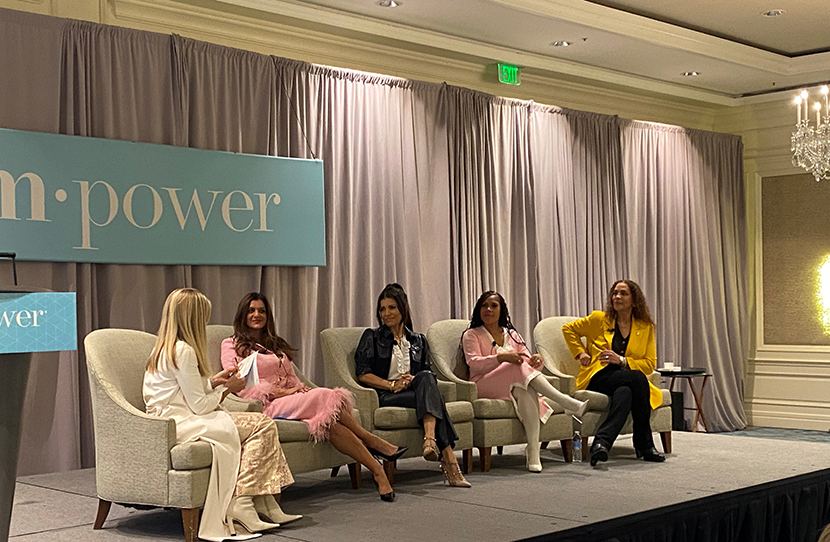
(l. to r: Laura Hopkins, Neena Vlamis, Mindy Stearns, LaTasha Waddy, Suha Zehl)
AMELIA ISLAND, Fla.–In the fast-changing mortgage industry, mentorship can provide stability, direction and confidence, panelists said here at MBA’s Independent Mortgage Bankers conference.
Moderator Laura Hopkins, AMP, MBA’s senior vice president of membership, meetings and mPower–and the new face of MBA’s mPower community after the retirement of mPower Founder Marcia Davies–led a conversation that included Neena Vlamis, Mindy Stearns, LaTasha Waddy and Suha Zehl, CMB, AMP.
Mindy Stearns, chief kindness officer with Kind Lending, said she has a television background, including working at Los Angeles’ KTLA TV. “I think it’s really important to be in the trenches with your people,” she said. “But really, at the end of the day, it’s about the people you interact with…When I was in television, I had people help me through an industry that can be dog-eat-dog.”
For one example, Stearns said prominent movie critic Leonard Maltin counseled her about her career trajectory when she was starting out in television.
It’s important to find people that support your journey, Stearns added. “Find the people that you trust. Because trust is everything in this industry.”
In addition, people like to be acknowledged. “They want to be seen,” Stearns said. “They want to be valued. So it was really exciting to get into this industry and be part of something that has a profound impact.”
“It’s really the people that we interact with and how we bring them along and allow them to be their best and most authentic selves that’s really been exciting for me. That’s how we got into this role. It’s been a natural role for us to create mentees and mentorship relationships,” Stearns said.
NFM Lending President LaTasha Waddy cited a famous quotation that says, if you are the only one that can perform your vision, your vision is too small. “So, to build something, to create something, you need to involve other people to execute that in order to encourage you,” she said.
Waddy said mentorship has been meaningful for her, “but it’s also felt strategic in terms of actually being able to share what you’re working on and what you’re creating, and to bring in those around you so that you’re not just creating this on an island.”
“For any woman in this room that is in a senior leadership position: oftentimes, you’ll be the only woman in a meeting. Or there’s maybe one other woman in a room of 10 or 15 people,” Waddy said. “It is wonderful to have a mentor to say, ‘You’ve got this,’ or, ‘It’s going to be fine’.”
Hopkins asked Neena Vlamis, CEO and founder of A and N Mortgage Services Inc., if well-intentioned mentoring can ever fall short. “I think it can fall short when the mentorship is a not a mutual relationship,” Vlamis replied. “It can’t be a give, give, and then they just take, take, take situation. It should be a two-way street.”
“One thing that is really important that we do a lot in our office is pivoting,” Vlamis said. “I have the vision, and I know how to pivot if something is not working. It’s really important to know how to pivot, and not everybody knows how to do it. But pivoting safely doesn’t mean you’re starting a project and stopping; it means that something didn’t work and here’s why. Let’s debrief and figure out a better way to do it next time.”
“When you’re mentoring somebody, you want to make sure you’re bringing out the winner in them at all times. Is this going to make them happy? Is it going to bring them joy when they get home and are they going to wake up happy the next day? Those are really important things,” Vlamis said.
Suha Zehl, CMB, AMP, founder and senior advisor with Z Technology Solutions, noted that it’s possible to get caught up in giving advice and telling people how they should do things. “But, really, mentoring is about listening,” she said. “Listening to find the strengths of the person that you’re mentoring and allowing them to make mistakes, knowing that they have a safe space to fail or readjust or pivot…The strongest leaders are those that can say, ‘I don’t have all the answers’ and really pull out of people what their strengths are.”
“One of the things that I tell my mentees all the time is that every company has a board of directors. Think of yourself as a company; you need your own board of directors,” Zehl said. “And your board of directors is going to help you in different areas. You need somebody to be a cheerleader. You need somebody to be honest with you about exactly what’s right and what’s wrong. You need somebody that’s going to be empathetic and commiserate with you when things don’t go well.”
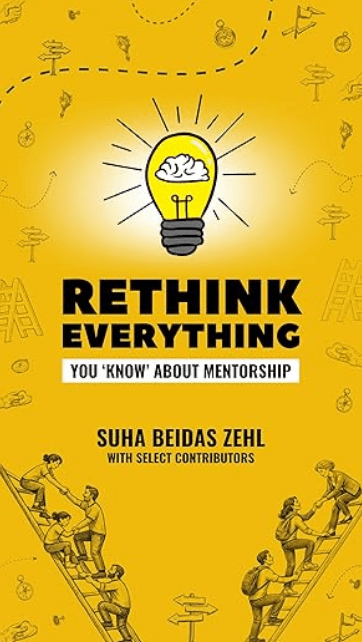
Zehl noted that she just released a book about mentorship, Rethink Everything You ‘Know’ About Mentorship. “We’ve got a number of contributors to the book in this room,” she said.
Zehl said mentoring does not need to be “top down,” noting that younger people have educated her about social media. “I learn from them; they are mentoring me on how to navigate that space,” she said. “So it doesn’t have to be top down. It doesn’t have to be somebody older mentoring somebody younger.”
In addition, a person can have multiple mentors, Zehl said. “You need a collection of three or four mentors that you work together with. Because you have different needs, and each mentor is going to fulfill a different aspect of those needs.”
