

Advocacy Update: Broeksmit Testifies on the Secondary Mortgage Market; House Passes Bipartisan Housing Package; MBA Warns Against VA Funding Fee Increases
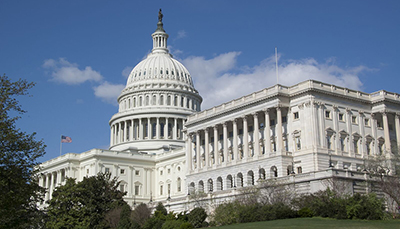
MBA’s Broeksmit Highlights Importance of Secondary Mortgage Market in Testimony Before Key Congressional Committee
On Wednesday, MBA President and CEO Bob Broeksmit, CMB, testified at a legislative hearing titled, “Homeownership and the Role of the Secondary Mortgage Market,” before the House Financial Services Subcommittee on Housing and Insurance.
• Read Broeksmit’s written and oral testimonies.
• A summary of the hearing can be found here.
Why it matters: In his testimony before the Subcommittee, Broeksmit outlined the structure, scale, and importance of the U.S. secondary mortgage market, explaining how lenders sell loans into the market to be securitized through Ginnie Mae, Fannie Mae, Freddie Mac, and private-label securities, thereby increasing liquidity and expanding access to affordable mortgage credit. He emphasized the enormous size of the U.S. housing finance system — including $48 trillion in owner-occupied real estate, trillions more in multifamily debt, and daily MBS trading volumes averaging $351 billion — and highlighted the central role of the uniquely American 30-year fixed-rate mortgage, which protects borrowers from rate volatility.
• Broeksmit underscored that securitization distributes risk to private investors, supports stable homeownership and rental markets, and depends on strong market pillars, contractual certainty, and thoughtful policy — particularly as policymakers consider the future of the GSEs and broader housing affordability reforms.
Go deeper: In an exchange with Rep. Troy Downing (R-MT), Broeksmit highlighted MBA’s three, near-term housing affordability policy recommendations – GSE LLPA reductions, FHA MIP cut, and credit report modernization – that are administratively achievable and could gain traction with the Trump administration’s stated interest in lowering housing costs. Broeksmit, in an exchange with Rep. Timmons (R-SC), stressed the critical importance of the GSEs’ cash window in providing liquidity, especially for small and mid-sized lenders, that may not have the scale to issue their own MBS and advocated for policies that ensure smaller lenders are not disadvantaged in the secondary market and that mortgage liquidity remains broadly accessible across the country. He also noted the need for greater transparency regarding cash window and MBS pricing to ensure the cash window serves its intended purpose.
What’s next: MBA remains engaged with Congress and the Trump administration on all aspects of real estate finance and the secondary mortgage markets.
For more information, please contact Rachel Kelley at (202) 557-2816, George Rogers at (202) 557-2797, and Jeremy Green at (202) 557-2849.
U.S. House Passes Bipartisan Housing Package
On Monday evening, the full U.S. House passed (390-9) H.R. 6644, the Housing for the 21st Century Act. The housing package aims to tackle supply and affordability challenges, modernize local development, and improve government housing programs.
• Specifically, the package (see breakdown here) advances several MBA-backed reforms, including updating Federal Housing Administration (FHA) multifamily loan limits, streamlining federal housing program offerings, incrementally improving financing processes for Rural Housing Service loans, providing targeted support for home construction and rehabilitation, and fostering stronger coordination among federal agencies and Congress.
• Monday’s vote was under “suspension of the rules,” a “fast-track” procedure for non-controversial bills to avoid lengthy debates and the offering of amendments.
What they’re saying: In a press statement, MBA’s Broeksmit said, “Housing affordability is a top concern for homeowners, renters, and communities across the country. Today’s overwhelming bipartisan vote signals meaningful legislative momentum to expand supply, improve affordability, and modernize housing policy.”
Go deeper: In advance of Monday’s vote, MBA sent its latest support letter to House leadership (read another from December) and joined two other trade letters here and here.
• The House package passed the full House Financial Services Committee (HFSC) on December 17 by a vote of 53-1 and was introduced on December 11th by House Financial Services Committee Chair French Hill (R-AR), Ranking Member Maxine Waters (D-CA), Housing and Insurance Subcommittee leaders Mike Flood (R-NE) and Emanual Cleaver (D-MO), and a bipartisan group of lawmakers as a counterpoint to the Senate’s ROAD to Housing Act proposal.
• The Senate bill is a bipartisan package of roughly 40 aggregated housing proposals that advanced out of the Senate Banking Committee in July 2025 and was adopted by voice vote prior to the full Senate’s passed version of the Fiscal Year (FY) 2026 National Defense Authorization Act (NDAA) in October 2025. A full Senate vote on the package could happen as soon as later this month.
What’s next: MBA will continue to work with House and Senate leaders and their staffs to help reconcile differences between the two housing packages, particularly regarding their sections on appraisals and Rural Housing Service program reforms, once the bills proceed further on parallel tracks in both chambers.
For more information, please contact Rachel Kelley at (202) 557-2816, George Rogers at (202) 557-2797, and Jeremy Green at (202) 557-2849.
MBA Warns Key House Panel Regarding VA Loan Funding Fee Increases
On Thursday, the full House Veterans’ Affairs Committee held a markup and advanced (along strict party lines) a bill (H.R. 6047) that would impose a three-tiered set of VA home loan program funding fee increases to offset the costs of increasing benefits for catastrophically disabled Veterans and their survivors.
• Find the full text of the Amendment in the Nature of a Substitute (ANS) to H.R. 6047 here and watch the full markup here.
• MBA’s Chief Lobbyist Bill Killmer sent a letter indicating MBA’s support for the legislation’s noble intent while explaining that MBA cannot yet support the proposal as currently drafted because its proposed funding fee increases would harm veterans’ access to affordable home financing.
Why it matters: The bill’s current spending offsets would extend previous hikes in the VA home loan program funding fee to 2036, raise the VA Interest Rate Reduction Refinance Loan (IRRRL) fees to a level of 1.4%, and increase the rate on VA loan assumptions (with no defined sunset date). In its letter, MBA urged lawmakers to revise Section 3 of the bill to remove or significantly modify the fee increases and extensions.
What’s next: As discussions regarding H.R. 6047’s House floor consideration gain momentum, MBA will continue to advocate for the changes outlined in the letter by working with lawmakers – primarily on both the House and Senate Veterans’ Affairs Committees – to ensure that VA home loan program funding fees remain appropriately affordable as an earned benefit for veterans and their families.
For more information, please contact Rachel Kelley at (202) 557-2816 and Bill Killmer at (202) 557-2736.
House Unanimously Passes FSOC Reforms
On Monday, the full House of Representatives passed – by voice vote – bipartisan legislation (H.R. 3682) that favorably alters the process by which the Financial Stability Oversight Council (FSOC) may designate a non-bank financial company as a Systemically Important Financial Institution (SIFI).
• The bill, sponsored by key HFSC Reps. Bill Huizenga (R-MI) and Bill Foster (D-IL), cleared the HFSC panel last fall with broad bipartisan support. Find MBA’s letter of support for the measure that was delivered to all House Members prior to the vote here.
Why it matters: MBA supports the key elements of H.R. 3682, which would require that FSOC consider the full range of tools at its disposal, including direct consultations with a company and its primary regulator, who is most familiar with the activities of the firms they oversee, before proposing to designate a company for heightened prudential regulation and supervision by the Federal Reserve Board.
• Although not focused exclusively on housing and mortgage-related non-bank institutions, the bill’s enactment would be beneficial for MBA’s member non-bank companies (of scale) that could, over time, potentially be scrutinized as possible SIFI designees.
What’s next: A Senate companion bill is rumored to be in the works. MBA (and our coalition partners that support the legislation) will continue to advocate for passage of these targeted FSOC reforms in the coming weeks and months (and the remainder of the 119th Congress).
For more information, please contact Rachel Kelley at (202) 557-2816 and Bill Killmer at (202) 557-2736.
House Panel Holds Hearing on Broad Range of Affordability Concerns
On Tuesday, the full HFSC held a hearing entitled, “Priced Out of the American Dream: Understanding the Policies Behind Rising Costs of Housing and Borrowing.”
• Lawmakers from both parties and multiple witnesses spotlighted the growing pressures affecting homebuyers and lenders. Issues included escalating regulatory burdens and compliance costs, construction challenges, appraisal issues, and the declining participation of community banks in mortgage lending. Find a summary for the full hearing here.
Why it matters: The hearing reinforced several of our industry’s priority concerns, such as: the need for tailored regulation that supports responsible bank and nonbank mortgage lending; the importance of reducing unnecessary compliance barriers that restrict credit access; the role of liquidity, capital, and servicing rules in determining lender participation; and, the broader supply‑side constraints driving up home prices.
• Members also heard witness testimony reinforcing how regulatory overreach, elevated interest rates, and structural impediments across permitting, zoning, and construction are contributing to the housing affordability crisis — factors that all ultimately impact origination volumes, operational costs, and consumer demand.
What’s next: MBA will continue to press for consideration – by both the Congress and the Trump administration – of its housing affordability recommendations in the coming weeks and months.
For more information, please contact Rachel Kelley at (202) 557-2816 and Bill Killmer at (202) 557-2736.
GAO Releases Report on Nonbank Mortgage Companies
On Tuesday, the Government Accountability Office (GAO) released the report, “Nonbank Mortgage Companies: Ginnie Mae and FHHA Could Enhance Financial Monitoring (GAO-26-107436).” The report was intended to assess the (1) role of nonbanks in the mortgage market since 2014 and, (2) the adequacy of the processes Ginnie Mae and the Federal Housing Finance Agency (FHFA) use to assess the financial condition of nonbank mortgage companies.
Go deeper: The GAO found that nonbanks offer benefits to the market, such as faster technology adoption and increased market liquidity, and serve many historically underserved borrowers. The GAO report also found vulnerabilities, such as reliance on short-term funding sources and fewer financial resources than banks.
The report included four recommendations for Ginnie Mae and FHFA, to which they each agreed:
• FHFA to develop procedures to assess the reliability of Mortgage Bankers Financial Reporting Form (MBFRF) data it uses for monitoring;
• Ginnie Mae to develop guidance requiring analysts to consistently review all key components of warehouse lending risk;
• FHFA to consider additional warehouse lending risk components in its scoring process; and
• Ginnie Mae to consider additional nonbank stress scenarios in its stress testing.
Why it matters: As FHFA and Ginnie Mae develop policies in response to the recommendations, there may be programmatic implications for IMBs.
What’s next: MBA will engage with FHFA and Ginnie Mae as they develop their responses to the GAO’s recommendations.
For more information, please contact Kait Hildner at (202) 557-2933.
MBA Joins Industry Coalition in Utah to Oppose Removal of Notarial Acknowledgment
On Wednesday, MBA and Utah Association of Mortgage Professionals (UTAMP) signed onto a joint industry coalition letter opposing Utah’s HB 319. This proposed legislation would create the concept of “digitally authenticated records” through a new system of “digital authentication” as an alternative to traditionally notarized documents.
• The letter warns that replacing traditional and remote online notarization—complete with identity verification, electronic journals, and audio‑video records—with an undefined and untested technology‑only process would unintentionally open new pathways for deed and mortgage fraud.
Why it matters: Deed fraud is already a fast‑growing title risk whose costs ultimately translate into higher costs for lenders and consumers. The industry remains open to ideas to combat deed fraud and lower the cost of origination, however, this legislation does not provide a safe avenue for lenders or consumers to reduce these risks.
What next: MBA and UTAMP will continue to advocate for industry concerns in opposing the legislation as it is debated in the Utah House and will also seek to prevent it crossing over for consideration the Utah Senate. Additionally, MBA will continue supporting state partners seeking legislation to add meaningful protections for consumers against deed fraud.
For more information, please see MBA joint coalition Deed Fraud Issue Brief and suggested legislative text, or contact William Kooper (202) 557-2737 or Liz Facemire (202) 557-2870.
Upcoming MBA Education Webinars on Critical Industry Issues
MBA Education continues to deliver timely single-family programming that covers the spectrum of challenges, obstacles and solutions pertaining to our industry. Below, please see a list of upcoming and recent webinars – all complimentary to MBA members:
• Comparing State Community Reinvestment Laws for Independent Mortgage Banks in NY, IL, and MA – March 11
• Expedite Your Prequalification Process – March 11
• How Secondary Marketing Powers Mortgage Lending – April 1
• State of the Market: Tech Trends Shaping the Future of Mortgage Lending – May 14
MBA members can register for any of the above events and view recent webinar recordings by clicking here.
For more information, please contact David Upbin at (202) 557-2931.
