

RentCafe: Rental Competitiveness Cools Slightly–but Not Everywhere
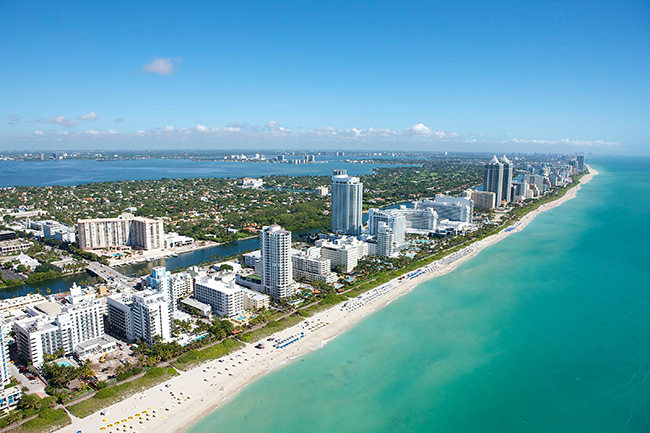
(Miami, courtesy of Antonio Cuellar via Unsplash)
RentCafe, Santa Barbara, Calif., released its latest report on the competitiveness of the rental market, finding that the national rental competitiveness index score dipped from 75.7 to 75.4 in early 2026, indicating it should be getting easier to find a place to rent.
RentCafe noted that any score above 70 means it’s tough for renters to secure an apartment. The typical apartment got filled in 46 days in early 2026, compared with 43 days last year. Nationwide, about 92.7% of all apartments are occupied, and 62.8% of renters are renewing their leases.
While that’s the nationwide picture, some markets are significantly more competitive.
Miami is at the top of the list, with a rental competitiveness score of 90.5.
Chicago’s rental competitiveness score jumped 9.5 points year-over-year to 88.8, putting it in second place overall. That increase was the largest year-over-year jump in any major market.
No. 3 is Suburban Chicago at 86.7, followed by Suburban Twin Cities at 86.3 and Silicon Valley, Calif., at 85.4.
Other markets that saw large year-over-year increases include San Francisco, up by 6.1 points year-over-year, Atlanta, up by 6 points year-over-year, Silicon Valley, Calif., up 5.8 points year-over-year and Jacksonville, Fla., up 5.5 points year-over-year.
Looking at small markets, Wichita, Kan., is the most competitive, with a score of 91. Amarillo, Texas, is No. 2 with a score of 89.7, Lafayette, Ind., is No. 3 with a score of 88.8, Harrisburg, Pa., is No. 4 with a score of 88.4, and Lehigh Valley, Pa., is No. 5 with a score of 88.3.
Wichita also saw the largest increase year-over-year, up 14.6 points.
RentCafe analyzes data from its parent company, Yardi Matrix, across five factors, including how many renters competed for each available apartment, how many renters are staying put, how long it takes for an apartment to get filled, the share of apartments that were occupied and the share of new apartments.
