

Advocacy Update: Congress Eyes SF Investor Ban; Prudential Regulators SBC Hearing Recap; MBANAC26 Early Bird Registration Ends March 2
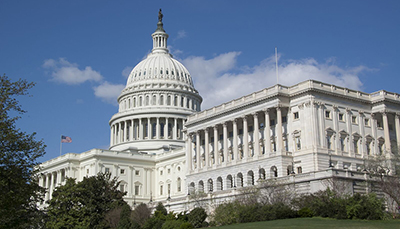
Congress Eyes Single-family Rental Investor Ban Proposal Following President Trump SOTU Address
Last Tuesday evening, President Donald Trump delivered his State of the Union Address, an almost two-hour speech that primarily focused on his 2025 record on the economy, immigration, foreign policy, tariffs, and more.
• While housing affordability was only briefly mentioned – in the context of lower mortgage rates and new loan amounts being lower than a year ago – President Trump doubled down on his recent calls for Congress to pass a ban on institutional investors’ ability to buy single-family homes.
Go deeper: In January, President Trump issued an Executive Order (EO) aimed at curbing large institutional investors’ participation in the single-family housing market by directing federal agencies to identify ways to halt government-backed financing, insurance, or securitization of homes that could otherwise be owned by individuals, and by prohibiting the sale of federally owned single-family properties to such investors. The EO also called on Congress to enact legislation banning institutional investors purchasing single-family homes.
Why it matters: Since last month’s EO was issued, President Trump has urged Congress to codify restrictions on institutional investors purchasing single-family homes. While details regarding final legislative text remain fluid, a recent White House proposal would bar entities that own more than 100 single-family homes (subject to limited exceptions) from acquiring additional properties, though it would not require them to divest homes they already own.
• MBA’s primary concerns are that any legislation must avoid: inadvertently scoping in properties that have traditionally operated as multifamily rental communities, undermining housing supply and affordability by constraining capital for rental housing, limiting build-to-rent communities, and restricting mortgage servicers’ ability to acquire and dispose of REO properties—activities essential to maintaining housing supply and neighborhood stability.
What’s next: Senate Majority Leader John Thune (R-SD) has taken procedural steps to begin floor consideration of an evolving iteration/amended version of the recently House-passed (February 9th) bipartisan housing package, H.R. 6644, the Housing for the 21st Century Act of 2025. The House bill would be combined in some form or fashion with the Senate’s ROAD to Housing Act – which was cleared unanimously by the Senate Banking Committee last summer. The White House and Treasury Department have urged Senate leaders to add finalized institutional investor ban text to this emerging bicameral housing package as the floor debate evolves over the next two weeks.
• MBA is engaged with the Administration and lawmakers in both chambers of Congress – and on both sides of the political aisle – on key elements of the housing package, including the institutional investor ban piece.
For more information, please contact Bill Killmer at (202) 557-2736, Rachel Kelley at (202) 557-2816, George Rogers at (202) 557-2797, and Jeremy Green at (202) 557-2849.
Prudential Regulators Testify at Senate Banking Committee Hearing
Last Thursday, the Senate Banking Committee held a hearing titled, “Update from the Prudential Regulators: Rightsizing Regulation to Promote American Opportunity.” The witnesses were: Michelle Bowman, Vice Chair for Supervision, Board of Governors of the Federal Reserve System; Travis Hill, Chairman, Federal Deposit Insurance Corporation (FDIC); Jonathan Gould, Comptroller, Office of the Comptroller of the Currency (OCC); and Kyle Hauptman, Chairman, National Credit Union Administration.
• The hearing focused on the state of the banking sector, tailoring the regulatory and supervisory framework to the risks posed by different bank business models, and modernizing capital requirements. A summary of the hearing can be found here.
• Chairman Tim Scott (R-SC) praised Vice Chair Bowman’s recent public comments about “helping banks return to mortgage lending.” Vice Chair Bowman elaborated on this in response to Chairman Scott, noting that as a former community banker, she saw firsthand how regulations made it “very difficult for us to change the way that we did real estate lending.” She explained that the upcoming Basel III re-proposal would address this by recalibrating the risk-weighting for residential mortgage lending to “encourage the banks to get back into the mortgage business.”
Go deeper: MBA’s Statement for the Record for the hearing focused on four key reforms: (1) reducing the 100% risk weight on warehouse lines of credit that support IMBs; (2) reducing the 250% risk weight for Mortgage Servicing Agreements (MSAs); (3) raising the Common Equity Tier 1 (CET1) cap on MSAs; and, (4) recalibrating CRE risk-weights to better align the capital charges with the loan-specific risks.
• Senator Pete Ricketts (R-NE) discussed the current CET1 cap on mortgage servicing assets (MSAs), saying that it punitively harms community banks and their ability to maintain local customer relationships. Senator Ricketts also noted that fixing the capital requirements for MSAs will help ensure a more orderly and liquid MSA market for all participants, which in turn would bring more stability in the mortgage market.
What’s next: The prudential regulators testified that they had reached consensus on the Basel III re-proposal, with their stated hope to release a proposed rule to the public by the end of March (while acknowledging that this timeline could slip). MBA will continue to engage closely with key officials at the Fed, OCC, and FDIC (and lawmakers) and these crucial bank capital standards.
For more information, please contact: George Rogers at (202) 557-2797 and/or Jeremy Green at (202) 557-2849.
MBANAC26 Early Bird Registration Ends March 2 — Secure Your Spot
Join us in Washington, D.C., on April 14 and 15 to connect with key policymakers, engage with colleagues from across the industry, and hear directly from policy experts about the most pressing issues shaping real estate finance.
• With so many critical priorities on the agenda—including the future of the GSEs, promoting solutions to housing affordability, encouraging the responsible use of artificial intelligence in mortgage operations, and supporting long-term reauthorization of essential federal programs — your presence at NAC matters. Showing up, sharing insights, and providing lawmakers with timely information is essential to driving meaningful progress.
Go deeper: The NAC26 speaker lineup will feature House Financial Services Committee Chairman French Hill (R‑AR), senior Senate Banking Committee member Mike Rounds (R‑SD), renowned political pundit Charlie Cook, and National Journal Editor Kirk Bado – as well as other bipartisan speaker invitations outstanding. Rest assured, the program is shaping up to be a compelling agenda that will equip attendees for a productive day on Capitol Hill on Wednesday, April 15.
Why it matters: NAC offers a valuable opportunity for industry stakeholders to meet directly with their elected officials — and key staffers — to discuss the issues shaping the future of real estate finance.
What’s next: MBA will continue to engage with industry advocates throughout the year, including during its annual Advocacy in August campaign as part of the traditional August congressional recess. During this period, MBA’s Legislative and Political Affairs team will coordinate in-person and virtual meetings with lawmakers in their home states or districts.
You can also join MBA for the Mortgage Action Alliance’s (MAA) Action Week (May 11-15) to participate and lead a MAA campaign at your company or state association, helping to grow our industry’s collective advocacy efforts.
For more information, please contact maa@mba.org or Jamey Lynch at (202) 557-2818.
Upcoming MBA Education Webinars on Critical Industry Issues
MBA Education continues to deliver timely single-family programming that covers the spectrum of challenges, obstacles and solutions pertaining to our industry. Below, please see a list of upcoming and recent webinars – all complimentary to MBA members:
• Comparing State Community Reinvestment Laws for Independent Mortgage Banks in NY, IL, and MA — March 11
• Expedite Your Prequalification Process – March 11
• Fraud Detection and Prevention in Non-Agency Lending – March 31
• How Secondary Marketing Powers Mortgage Lending – April 1
• Data & System Privacy in an AI World – April 2
• Drilling into Mortgage Accounting – April 22
• State of the Market: Tech Trends Shaping the Future of Mortgage Lending – May 14
MBA members can register for any of the above events and view recent webinar recordings by clicking here.
For more information, please contact David Upbin at (202) 557-2931.
