

Advocacy Update: MBA’s Broeksmit Testifies on the Hill on Basel III Re-proposal; Fed Keeps Rates Steady, Warsh Nomination Advances; Banking Agencies Finalize CBLR Rule
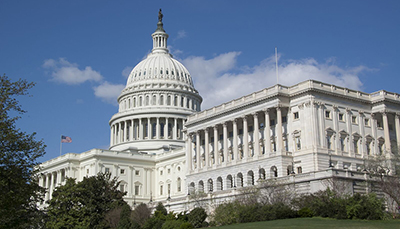
MBA’s Broeksmit Offers Key Basel III Re-proposal Recommendations in Testimony Before Key Congressional Committee
On Tuesday, MBA President and CEO Bob Broeksmit, CMB, testified at a legislative hearing titled, “Prioritizing Main Street: Evaluating the Impact of Capital Proposals on Economic Growth and American Communities,” before the full House Financial Services Committee. The hearing was focused primarily on the Banking Agencies’ Basel III “Endgame” (“BE3”) re-proposal that was released by the Federal Reserve, Office of the Comptroller of the Currency (OCC), and Federal Deposit Insurance Corporation (FDIC) on March 19, 2026.
• Read Broeksmit’s written and oral testimonies.
• Summaries of the hearing can be found here and here.
Why it matters: Broeksmit told lawmakers that bank capital rules – while quite technical – directly affect the cost and availability of housing for families. He noted that the Basel III re-proposal is markedly improved compared to both the current framework and the 2023 re-proposal, but emphasized that key provisions still need refinement to better reflect real-world risks. In particular, he highlighted how unduly high capital requirements on mortgage servicing assets (MSAs) have driven banks out of the servicing market, reducing competition and increasing costs – costs that ultimately appear to borrowers at the closing table.
• Broeksmit also pointed to inconsistencies in the treatment of warehouse lending, where banks face higher capital charges on the warehouse line than when they seize the loan in the event a counterparty defaults – an outcome he called illogical and in need of correction. Finally, he stressed the importance of aligning capital rules for commercial and multifamily lending with actual loan performance, noting that banks play a critical role in financing housing and community development.
• Overall, Broeksmit outlined that thoughtful adjustments to the proposal would better align capital with risk and support more affordable housing and credit access for homeowners, renters, and commercial property borrowers.
Go deeper: Lawmakers from both parties asked Broeksmit to delve into how the proposed capital rules would impact competition, borrower costs, and access to credit – particularly through the treatment of MSAs, private mortgage insurance, warehouse lending, and capital requirements affecting affordability and market participation. In a key exchange, Rep. Bill Huizenga (R-MI) asked about incentives for bank participation in mortgage lending, and Broeksmit emphasized that stronger competition between all market participants (large and small banks, credit unions, and IMBs) is central to delivering more choices and better pricing for consumers.
• In another exchange, Rep. Gregory Meeks (D-NY) raised concerns about affordability and access for underserved borrowers under the re-proposal, and Broeksmit responded that removing prior “gold-plating,” calibrating capital by LTV, and recognizing PMI would better support low down-payment and first-time homebuyers.
What’s next: MBA is meeting regularly with members of its Basel III working group to formulate a response to the re-proposal by the June 18, 2026, deadline.
For more information, please contact Rachel Kelley at (202) 557-2816, Madisyn Rhone at (202) 557-2741, George Rogers at (202) 557-2797, Jeremy Green at (202) 557-2849, Fran Mordi at (202) 577-2860, and John Lammle at (202) 557-2789.
Federal Reserve Keeps Rates Unchanged
The Federal Reserve held the federal funds rate at a target range of 3.50-3.75% on Wednesday.
Why it matters: The Committee noted that, “Developments in the Middle East are contributing to a high level of uncertainty about the economic outlook. The Committee is attentive to the risks to both sides of its dual mandate.”
What they are saying: “The FOMC kept the federal funds target unchanged at its April meeting, likely to be Chair Powell’s last. Inflation has increased and is likely to rise further, given the oil price shock from the war in the Middle East. The job market has also remained resilient,” said Mike Fratantoni, MBA’s SVP and Chief Economist.
• Read more of Fratantoni’s commentary here.
For more information, please contact Mike Fratantoni at (202) 557-2935.
Senate Banking Committee Advances Federal Reserve Chairman Nominee Warsh
On Wednesday, the Senate Banking Committee held an executive session and favorably reported the nomination of The Honorable Kevin Warsh to be a Member and Chair of the Board of Governors of the Federal Reserve System (“the Fed”).
• The Committee advanced Warsh’s nomination to the full Senate on a party-line 13-11 vote. Warsh formerly served as a Senate-confirmed Fed Board Governor from 2006 to 2011.
Go deeper: Once confirmed, Warsh would succeed Jerome Powell as Fed Board Chairman (Powell’s term as Chair expires on May 15). Warsh’s nomination advanced after Senator Thom Tillis (R-NC) lifted his prior hold on Warsh’s nomination, following assurances the Department of Justice would end its ongoing investigation into Powell’s handling of a major Fed building renovation.
• Senator Tillis had viewed the probe as political pressure on the independence of the Fed. Powell stated during a Wednesday’s FOMC press conference that he plans to remain on the Fed’s Board of Governors—where his term as an individual Governor (but not Chair) runs through January 2028—for at least some period while an internal Fed Inspector General review continues.
Why it matters: During his confirmation hearing last week, Warsh said an expanded Fed balance sheet distorts markets, favors financial assets, and weakens the Fed’s credibility. He supports gradually reducing the balance sheet and returning to interest rates as the primary policy tool to better serve the dual mandate of price stability and maximum employment.
What’s next: Senate Majority Leader John Thune (R-SD) has filed a cloture motion to limit further debate on the Warsh nomination. With next week’s Senate recess, the cloture motion will “ripen” for a vote during the week of May 11. If cloture is invoked (as expected), Warsh’s nomination is then subject to up to 30 hours of “post-cloture” debate. Warsh’s confirmation vote by the full Senate is expected to occur prior to the expiration of Powell’s term as Chair of the Fed Board on May 15.
For more information, please contact George Rogers at (202) 557-2797 or Jeremy Green at (202) 557-2849.
Agencies Finalize MBA-Supported Revisions to Community Bank Leverage Ratio Rule
Federal Banking Agencies (Federal Reserve, OCC, and FDIC), finalized a rule updating the community bank leverage ratio (CBLR), providing community banks with greater flexibility and reducing regulatory burden.
Go deeper: In January, MBA and several MBA Community Bank members submitted comments on the notice of proposed rulemaking (the NPR) issued jointly by the Agencies on revisions to the CBLR.
Why it matters: MBA has long supported the CBLR framework as an important tool for providing meaningful regulatory relief for qualifying community banks. The final rule will lower the community bank leverage ratio from 9% to 8%, providing more flexibility for community banks to opt into the framework.
• The final rule also extends the grace period from two quarters to four quarters for a community bank that temporarily falls out of compliance. The framework further streamlines regulatory capital requirements for community banks by enabling the use of a simplified leverage ratio as a measure of capital adequacy, instead of requiring risk‑based capital calculations and reporting.
What’s next: The changes will take effect July 1, 2026. Community banks that opt into the framework will be subject to a capital requirement that continues to promote safety and soundness. Under this framework, banks must maintain a leverage ratio that is substantially higher than the standard leverage ratio otherwise applicable to community banks.
MBA thanks its Community Bank members that submitted letters in support – their advocacy was instrumental in achieving this outcome.
For more information, please contact Fran Mordi at (202) 557-2860 or Monique Ellis at (202) 557-2856.
Ginnie Mae Shields Issuers from FHA TPP-Driven Delinquency Spike
Ginnie Mae recently issued an All Participant Memorandum (APM) to temporarily exclude loans under a Trial Payment Plan (TPP) from issuers’ delinquency rate calculations.
• In recent months, MBA has engaged with Ginnie Mae on its acceptable delinquency rates, given the recent policy changes to the Federal Housing Administration’s (FHA’s) loss mitigation waterfall. This APM is a helpful step toward ensuring that Ginnie Mae issuers are not penalized for policy changes outside of their control.
Why it matters: The FHA’s new loss mitigation waterfall requires borrowers to complete a TPP before receiving certain loss mitigation solutions. During the three-month TPP, the loan maintains its delinquency status. This policy change has resulted in higher delinquency rates for the FHA book. Ginnie Mae issuer delinquency rates are likely to be further elevated when the Department of Veteran Affairs (VA) enacts its loss mitigation waterfall change that will also include a TPP.
What’s next: Ginnie Mae will continue to monitor delinquency rates to determine when it would be an appropriate time to revert back to the standard delinquency calculation. MBA will continue to monitor how TPPs are affecting delinquency rates and engage with Ginnie Mae to focus on counterparty risk metrics that measure risks within issuers’ control.
For more information, please contact Kait Hildner at (202) 557-2933.
HUD and USDA Rescinds 2021 IECC Mandates
On Tuesday, the Department of Housing and Urban Development (HUD) and the Department of Agriculture (USDA) rescinded the 2024 “Adoption of Energy Efficiency for New Construction of HUD- and USDA Financed Housing.”
• This rule would have required the use of the 2021 International Energy Conservation Code (IECC) building standards for all HUD and USDA-insured or guaranteed properties.
• MBA has consistently raised concerns with both agencies about the costs and operational challenges associated with mandating the 2021 IECC and has actively advocated for the reversal of this policy, citing its impact on affordability and the limited adoption of the standards across states.
Why it matters: The vast majority of states require 2009 IECC or an older version of the codes. MBA had cautioned that if the rule had gone into effect, it would have created substantial burdens on developers of new or substantially rehabilitated multifamily properties and single-family homes – increasing costs and complexity. Estimates indicated the 2021 IECC requirements could have increased construction costs by $20,000 to $31,000 per home, in addition to broader impacts on housing supply, timelines, and affordability.
What are they saying: In a press statement after the announcement, MBA’s Broeksmit said, “MBA welcomes today’s announcement from HUD Secretary Scott Turner and Secretary of Agriculture Brooke Rollins rescinding a burdensome and costly regulation that would have significantly increased the price of new home construction and limited access to FHA and USDA financing.”
What’s next: MBA appreciates the recission by HUD and USDA and will continue to ensure that the need for more affordable housing is balanced appropriately to support continued development of energy efficient, safe, decent, and sustainable housing across the nation.
For more information, please contact Megan Booth at (202) 557-2740 or Darnell Peterson at (202) 557-2922.
MBA Joins Trades in Supporting VA Appraisal Updates
MBA, Tuesday, MBA, along with a coalition of trade associations, submitted a joint letter to the Department of Veterans Affairs supporting efforts to modernize the VA appraisal process in line with the Trump administration’s recent Executive Order on promoting access to mortgage credit.
Go deeper: The letter calls on VA to align its valuation framework more closely with Fannie Mae and Freddie Mac (the GSEs), including replacing outdated Minimum Property Requirements with standardized property condition ratings, expanding the use of alternative valuation methods, and adopting UAD 3.6. The letter also urges the VA to reduce barriers to appraiser participation by revisiting appraiser experience requirements, which could help lower costs and reduce appraisal delays, particularly in rural markets.
Why it matter: These recommendations are intended to improve efficiency, reduce friction in the homebuying process, and enhance veterans’ access to the VA Home Loan Guaranty Program.
What’s next: MBA will continue to engage with the VA to address its minimum property requirements.
For more information, please contact Darnell Peterson at (202) 557-2922.
HVAC Members Introduce VA Home Loan Modernization Bill
On Wednesday, several Republican Members of the House Veterans’ Affairs Committee (HVAC) introduced H.R. 8532, the VA Home Loan Affordability Act. This legislation, if enacted, is an attempt to modernize key elements of the VA Home Loan program by streamlining processes impacting lender fee documentation, appraisal waivers for refinancing, closing costs, and more.
• The full text of the legislation can be found here.
Why it matters: After being invited to provide technical feedback ahead of introduction, MBA commended the bill’s sponsors for improving efficiency in the VA Home Loan Program, expanding veterans’ access to credit, and strengthening the program without new lender mandates. The bill also reduces regulatory friction and better aligns VA requirements with FHA standards—capping closing costs at 1.5% and seller concessions at 6%, providing regular DTI updates, and simplifying appraiser qualification requirements.
What’s next: As the bill progresses through the HVAC for an expected markup in the coming weeks/months, MBA will stay in dialogue with key Committee members (and staff) to encourage refining and improving the bill’s condominium-related requirements to better protect borrowers from risky loan terms – along with encouraging a tighter review of the bill’s minimum property requirements.
For more information, please contact Rachel Kelley at (202) 557-2816 or Madisyn Rhone at (202) 557-2741.
MAA Action Week, May 11-15: Sign Up to Run a MAA Enrollment Campaign
From May 11–15, MBA will rally members nationwide to engage with policymakers, share their stories, and help shape the future of real estate finance during MAA Action Week.
SIGN UP to lead a campaign at your company or state association and help grow MBA’s FREE grassroots network of industry professionals. Your participation strengthens our collective impact and ensures our voice is heard.
Why it matters: A strong grassroots campaign does more than raise awareness — it builds a lasting advocacy engine that drives progress well beyond Action Week. When companies mobilize their teams, participation grows, momentum builds, and policymakers hear directly from the professionals shaping the residential mortgage landscape. With more than 100 organizations joining us last year, 2026 is our moment to set a new benchmark.
• MBA provides ready‑to‑use resources—email templates, social content, active MAA rosters, and more—making participation simple and efficient.
What’s next: Let’s make this milestone year truly monumental. Complete our sign-up form, and we will begin preparing your customized campaign materials.
For more information, please contact Jamey Lynch, AMP at (202) 557-2818.
Upcoming MBA Education Webinars on Critical Industry Issues
MBA Education continues to deliver timely single-family programming that covers the spectrum of challenges, obstacles and solutions pertaining to our industry. Below, please see a list of upcoming and recent webinars – all complimentary to MBA members:
Closing the Performance Gap: What Top-Tier Mortgage Lenders Do Differently – May 13
State of the Market: Tech Trends Shaping the Future of Mortgage Lending – May 14
FHA Credit Watch Program: Revisiting Delinquency Trends and Remediation – May 14
Structuring the SAR Narrative: A Four-Part Framework That Works – May 19
Unlocking Opportunity: Innovative Solutions for Affordable Housing in Overlooked Markets – June 9
New and Evolving Loss Mitigation Options – June 10
MBA members can register for any of the above events and view recent webinar recordings by clicking here.
For more information, please contact David Upbin at (202) 557-2931.
