

Advocacy Update: Bipartisan Housing Package Clears HFSC; MBA Calls on FHFA to Replace Tri-Merge; More
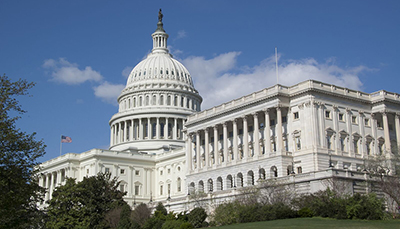
House Financial Services Committee Passes Bipartisan Housing Package, NFIP Extension Bill
On Wednesday, the full House Financial Services Committee (HFSC) at the conclusion of its two-day committee markup passed a slightly amended version of H.R. 6644, the Housing for the 21st Century Act, by a vote of 50-1.
• The House package was introduced on December 11th by House Financial Services Committee Chair French Hill (R-AR), Ranking Member Maxine Waters (D-CA), Housing and Insurance Subcommittee leaders Mike Flood (R-NE) and Emanual Cleaver (D-MO), and a bipartisan group of lawmakers as a counterpoint to the Senate’s ROAD to Housing proposal. The package aims to tackle supply and affordability challenges, modernize local development, and improve government housing programs.
• Specifically, the package advances several MBA-backed reforms, including updating Federal Housing Administration multifamily loan limits, streamlining federal housing program offerings, incrementally improving financing processes for Rural Housing Service loans, providing targeted support for construction and rehabilitation, and fostering stronger coordination among federal agencies and Congress.
• Read the text of the bill and the House panel’s section-by-section breakdown of its contents.
What they’re saying: MBA President and CEO Bob Broeksmit, CMB, in a press statement said, “Housing affordability remains one of the most pressing challenges facing aspiring homeowners, renters, and communities. Today’s overwhelmingly bipartisan vote in the House Financial Services Committee is a significant milestone.”
Why it matters: In a letter, and two joint trades letters (here and here) to the Committee ahead of the markup, MBA supported the overall proposal, providing specific commentary on key sections of the package and other pertinent measures considered during the markup.
• The NFIP Extension Act of 2026, which would extend authorization of the National Flood Insurance Program through September 30, 2026, was passed unanimously by the panel. MBA will push for this bill’s swift consideration and passage in both the House and Senate as soon as possible.
• MBA will now push for the bill’s swift consideration and passage in both the House and Senate as soon as possible.
• Earlier this month, MBA and a coalition of trade groups urged House leaders to pass a long-term reauthorization and reform of the National Flood Insurance Program to prevent disruptive lapses that harm homeowners, real estate markets, lenders, and communities dependent on coverage.
Go deeper: The Committee advancement of this comprehensive housing package comes on the heels of the Senate Banking Committee’s ROAD to Housing Act – a bipartisan package of roughly 40 aggregated housing proposals that advanced out of the Senate Banking Committee in July and was adopted by voice vote prior to the full Senate’s passed version of the Fiscal Year (FY) 2026 National Defense Authorization Act (NDAA) in October.
What’s next: MBA will work with House and Senate leaders and their staffs to reconcile differences between the two housing packages, particularly regarding their respective sections on appraisals and Rural Housing Service program reforms. MBA will continue to urge swift passage of a comprehensive housing bill to be signed into law as soon as possible in 2026.
For more information, please contact Bill Killmer at (202) 557-2736, Rachel Kelley at (202) 557-2816, and George Rogers at (202) 557-2797.
MBA Calls on FHFA to Replace Tri-Merge with Single Report for Lower Risk Borrowers
MBA recently sent a letter to Federal Housing Finance Agency (FHFA) Director William Pulte asking his agency to direct Fannie Mae and Freddie Mac (the GSEs) to allow lenders the option to use a single credit report from one national credit repository for borrowers if an initial report shows a credit score of at least 700, rather than requiring a tri-merge report on every loan.
• The letter emphasizes that this change would preserve sound risk management while reducing borrower costs, restoring competition among credit bureaus, and importantly, addressing the steep, recurring increases in tri-merge credit report pricing over the past four years. Lenders could still be required to request a credit score from all three major credit repositories for all other loans.
Why it matters: The letter comes on the heels of MBA’s Residential Board of Governors (RESBOG) endorsing this policy proposal last Thursday.
• MBA and its members believe strongly that the GSEs’ current requirement that lenders purchase and provide credit reports from all three major credit repositories increases costs for borrowers. In addition, it creates a situation where there is no competition between the bureaus, thus providing no meaningful incentive for them to improve the accuracy of their data or the quality of their products.
What they’re saying: MBA’s Bob Broeksmit said in a press statement last month, “Single-file reports are used safely in nearly every other consumer finance market, and extending them into the mortgage market would provide price relief for American homebuyers by injecting real competition, lowering closing costs, and streamlining the mortgage process, all without compromising sound risk management.”
By the numbers: Despite recent updates in offerings and altered pricing frameworks from both FICO and the bureaus, mortgage industry firms are reporting 2026 “tri-merge” credit report and credit score pricing increases of 40-50%, the fourth consecutive year of steep increases in the cost of tri-merge reports and credit scores.
What’s next: MBA has also presented this proposal to the leadership of both GSEs and anticipates further analysis and engagement with the GSEs and FHFA as part of the Administration’s focus on “affordability” initiatives.
MBA Responds to CFPB on Proposed Rule Amending Regulation B
On Monday, MBA submitted a comment letter to the Consumer Financial Protection Bureau (CFPB or the Bureau) in response to its proposed rule amending Regulation B (which implements the Equal Credit Opportunity Act (ECOA)). MBA’s summary of the proposed rule is available here. The proposed changes would:
• Limit discrimination claims under ECOA only to acts where creditors treat borrowers differently based on their protected characteristics;
• Limit discouragement claims to written statements or visual presentations, not acts or practices, such as the placement of branch offices, or marketing aimed at one group over another; and,
• Prohibit Special Purpose Credit Programs (SPCPs) created by for-profit institutions that use race, color, national origin, or sex as eligibility criteria for the program.
While this is a significant rulemaking with respect to federal anti-discrimination laws generally, it is important to note that much of the conduct covered by ECOA with respect to mortgage lending is already covered by the Fair Housing Act, including disparate impact claims.
Go deeper: MBA broadly supported the Bureau’s changes and asked for additional clarifying guidance where appropriate.
• MBA supports the Bureau’s effort to align liability under Regulation B with the statutory framework established by ECOA. This includes deleting references indicating that disparate impact liability may be applicable under ECOA.
• MBA has previously raised concerns about the overly expansive interpretation of Regulation B’s discouragement provisions and supports efforts to limit illegal discouragement to situations in which a creditor “knows or should know” that a spoken, written, or visual statement would cause a reasonable person to be discouraged from applying on a prohibited basis. In the letter, MBA asks for guidance explaining how creditors can engage in affirmative marketing based on protected characteristics.
• MBA believes that the Bureau should leave an avenue for programs designed to address special social needs, as allowed under ECOA, if they comply with existing Constitutional and statutory guardrails. This includes programs which target specific geographies that have experienced systemic disinvestment, but do not condition the provision of credit to residents of those identified geographies based on the applicant’s race. MBA also asks for additional guidance for creditors implementing an SPCP based on religion, age, or marital status.
What’s next: MBA will keep members informed of any updates on this rulemaking.
For more information, please contact Justin Wiseman at (202) 557- 2854 or Alisha Sears at (202) 557-2390.
Senate Confirms FDIC, FHA, and Ginnie Mae Leaders
On Thursday, the full Senate voted and confirmed the nominations of Travis Hill to be Chairman of the Board of Directors of the Federal Deposit Insurance Corporation (FDIC), Francis (Frank) Cassidy to serve as Assistant Secretary (Federal Housing Administration (FHA) Commissioner), Department of Housing and Urban Development (HUD), and Joseph Gormley to serve as the President of HUD’s Government National Mortgage Association (Ginnie Mae).
• The Senate confirmed the nominations as a part of a larger package of 97 nominations, including several at Treasury, HUD, and other agencies. A full list of the nominations confirmed can be found here.
What they are saying: In a press statement, MBA’s Bob Broeksmit said, “We will continue to work with these accomplished leaders and their staffs to streamline regulations, strengthen the mortgage market, boost bank participation in real estate finance, expand access to homeownership and rental housing, and promote policies that make housing more affordable for homeowners and renters nationwide.”
Go deeper: Earlier in the confirmation process, MBA sent letters of support for the trio of nominees, which can be found here and here.
What’s next: MBA will continue working with Chairman Hill, Commissioner Cassidy, and President Gormley on all pertinent real estate finance issues.
For more information, please contact George Rogers at (202) 557-2797 or Bill Killmer at (202) 557-2736.
Registration Discount for MBA’s Servicing Solutions Conference Ends January 6
On MBA members save $200 when they register by Tuesday, January 6 for MBA’s Servicing Solutions Conference and Expo, taking place February 16-19 at the Gaylord Texan in Dallas.
Why it matters: This conference is the industry’s premier event tailored to the interests of servicing professionals, with curated content, networking opportunities, and an expo hall featuring solutions providers. Registration rates increase after January 6th.
What’s next: Registered attendees will receive a personalized link to reserve their room at the Gaylord Texan at a discounted rate until January 16. Availability is limited.
For more information, please contact Meetings@mba.org.
Watch: On Developing a Successful Brand with Premier Mortgage Resources’ Mandi Feely Swain
mPower Founder Marcia M. Davies sits down with Mandi Feely Swain, Executive Vice President of Premier Mortgage Resources, to discuss her career journey and the importance of developing a personal and professional brand.
Go deeper: During this insightful interview, Mandi discusses the motivation for founding her company and how she finds fulfillment when working with others who are passionate about the homebuying process. Mandi also explains the importance of developing and maintaining a personal brand, and how it can increase your visibility within the industry and create new opportunities that could boost your own success within your company.
To watch more mPower Moments, click here.
For more information, please contact Marcia Davies at (202) 557-2707.
Upcoming MBA Education Webinars on Critical Industry Issues
MBA Education continues to deliver timely single-family programming that covers the spectrum of challenges, obstacles and solutions pertaining to our industry. Below, please see a list of upcoming and recent webinars – all complimentary to MBA members:
• The High-Performance Manager: Proven Systems to Lead, Recruit, & Coach Winning Sales Teams – Jan. 20
• Decoding Customer Satisfaction and Loyalty: Key Insights from J.D. Power’s Latest Mortgage Studies – Jan. 21
• 1099 vs. W-2: Avoiding Costly Compliance Mistakes – Jan. 22
• Mortgage Accounting Webinar Series: Loan Accounting, Part I: Drilling into Mortgage Accounting – April 22
• Mortgage Accounting Webinar Series: Loan Accounting, Part II: Loan Level Accounting – April 29
MBA members can register for any of the above events and view recent webinar recordings by clicking here.
For more information, please contact David Upbin at (202) 557-2931.
