

MBA NewsLink Commercial Tax Q&A with Cotality’s Aaron Eichenlaub
MBA NewsLink recently interviewed Aaron Eichenlaub, Senior Vice President of Commercial Payment Solutions at MBA Premier Member firm Cotality. He leads product, marketing, sales and customer support for the commercial tax business and recently spearheaded the successful launch of the division’s new customer-facing platform, the Commercial Tax Portal.
With nearly two decades of experience in the prop tech industry, Eichenlaub is a recognized leader in scaling organizations both in the U.S. and internationally. His deep expertise in aligning cross-functional teams has been critical in building innovative solutions that address customer needs and drive business growth. He is passionate about helping companies scale and brings a unique and impactful experience set to his role.
Eichenlaub is an active participant in the Mortgage Bankers Association and the Institute for Professionals in Taxation, contributing to the broader industry dialogue.
(Note: The views and opinions expressed here reflect those of the speaker and do not necessarily reflect the views or positions of Cotality.)
MBA NewsLink: What are the unique commercial tax challenges in 2026?
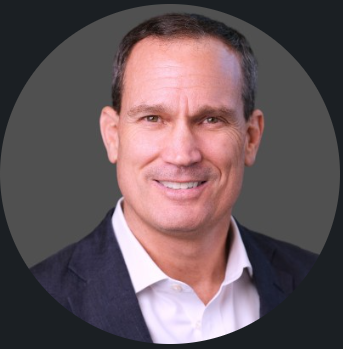
Aaron Eichenlaub: We’re hearing two themes consistently come up in conversations with clients: scaling with limited resources and operating more efficiently through technology. Commercial servicing teams are being asked to support portfolio growth without proportional increases in staff or budget. So it’s no surprise that supporting this growth with the same resources year over year is forcing clients to be creative on how to scale. Since budgets are constantly under review and margins are being constrained, operational efficiency is even more critical.
The risk profile in commercial tax heightens the stakes. Unlike residential assets, commercial properties often carry multimillion-dollar valuations. When taxes go delinquent, penalties and interest can escalate quickly — sometimes into six figures— creating outsized financial exposure. That reality puts added pressure on servicers to maintain precise oversight across thousands of loans and hundreds of jurisdictions.
At the investor level, the expectation is simple — they’re looking for certainty. While investors may not manage payments directly, they want confidence there are no delinquencies or tax lien risks within their portfolio. In 2026, delivering scalable visibility and reliable reporting will be central to meeting that expectation.
MBA NewsLink: How is commercial tax servicing evolving with the adoption of AI and increased automation?
Aaron Eichenlaub: We’re seeing that the pace of technology adoption is accelerating. Providers are having to evolve quickly to meet client expectations around efficiency, automation and transparency. Companies need to adopt solutions at a pace that is much faster than previously required — with AI and workflow automation no longer being future-state discussions, but rather operational requirements.
Empowering clients to have greater exposure to reporting is a top priority, and automation plays a role in that. The market is pushing for better user experiences and, rather than relying on static reports, clients want data feeds directly into their servicing platforms and internal dashboards. Automation, seamless workflows and improved data delivery through market-leading API solutions will be key.
AI is also reshaping how risk is monitored. Instead of reacting to delinquencies, we’re seeing more and more organizations leverage automation to proactively flag exposure and surface exceptions earlier in the process. In 2026, I expect we’ll see more of a shift in commercial tax servicing from reactive administration to proactive risk management with an emphasis on automation and smarter data integration.
MBA NewsLink: Scalability is critical this year. What advice do you have for lenders and commercial property owners to achieve scale efficiently?
Aaron Eichenlaub: Third-party outsourcing will be a trend that continues in my opinion. More and more companies are leveraging the infrastructure and expertise of outsourced solutions to fill their gaps. It’s no surprise that many lenders, regional banks and credit unions simply lack the internal bandwidth to manage commercial tax compliance across diverse jurisdictions. Hiring specialized staff is costly, and internal teams are already stretched thin — plus, fragmented approaches can limit transparency. Some organizations are experimenting with offshore BPO models to reduce costs, but at the same time, being overly reliant on these BPO solutions is also a major concern when considering how best to scale.
The complexity of managing thousands of taxing authorities adds to the challenge. Billing cycles, deadlines, penalty structures and payment method preferences vary widely. That’s why having access to more than 22,000 taxing authorities’ automated connections gives us a strong value add.
Since penalty exposure can escalate quickly, consistent oversight by expert teams is essential. Lenders and investors are looking for partners that can help them scale for more efficient operations.
In my view, the most effective strategy in 2026 balances control with scale. The goal should be to leverage experienced partners and integrated technology to centralize reporting, reduce manual processes and strengthen risk visibility.
MBA NewsLink: What’s changing with tax reporting and where do you see this headed in the next few years?
Aaron Eichenlaub: Better visibility to reporting, faster turn times and navigating the complexity of taxing authorities are key issues for many companies this year. Servicers and lenders are under pressure to deliver faster, clearer insight into tax status across their portfolios. As I mentioned, investors may not manage payments directly, but they expect transparent reporting and are prioritizing simplified monitoring tools with information all in one place.
Without centralized systems, delivering accurate, consolidated reporting becomes difficult and resource-intensive. Given these expectations, companies are looking to leverage tech leading partners to provide this expertise so that they can focus on managing their clients and growing their business.
It’s worth underscoring that reporting will become increasingly real-time and API-driven. The emphasis will shift toward seamless integration, auditability and consolidated visibility so that servicing teams can focus less on manual tracking and more on portfolio management.
It’s these shifting dynamics that drove the redesign of our Commercial Tax Portal. It gives clients all the information they need — payments, refunds and simplified searching for records — in a single end-to-end system without having to switch between modules and screens.
MBA NewsLink: What is the biggest concern with commercial taxes in 2026?
Aaron Eichenlaub: Minimizing risk is a top priority across commercial real estate, but the reality is that tax delinquencies, penalties and potential lien sales can still lurk in the background without clear oversight and visibility. In a higher-rate, margin-constrained environment, even incremental penalty exposure can impact asset performance in a significant way.
As capital becomes more selective and margins remain compressed, investors and lenders are scrutinizing operational risk more closely. Tax servicing—which was once viewed primarily as a back-office function—is increasingly recognized as a component of portfolio risk management.
In 2026, organizations that can deliver clear, proactive visibility into tax status will be better positioned to protect asset value and ensure investor confidence.
(Views expressed in this article do not necessarily reflect policies of the Mortgage Bankers Association, nor do they connote an MBA endorsement of a specific company, product or service. MBA NewsLink welcomes submissions from member firms. Inquiries can be sent to Editor Michael Tucker or Editorial Manager Anneliese Mahoney.)
