

FOMC Cuts Rate 25 Basis Points; MBA Economist Weighs In
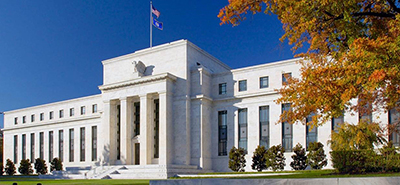
The Federal Reserve’s Federal Open Market Committee cut the federal funds rate target by 25 basis points on Dec. 10.
The rate cut is the third of the year.
MBA Senior Vice President and Chief Economist Mike Fratantoni noted three FOMC members dissented from Wednesday’s decision, which highlights how divided the committee is with respect to future rate cuts. “As in the prior meeting, there were dissents on both sides of the decision, with Governor Miran voting for a 50-basis-point cut and two FOMC members voting for no change,” he said.
“Inflation is well above the Fed’s target, but the job market appears to be softening, even as data to confirm that trend is still delayed due to the recent government shutdown. Thus, there is ammunition for both sides of the debate within the FOMC,” Fratantoni added.
“The projections published from this meeting show the committee does not see a clear path, with members indicating slightly faster growth, but similarly elevated inflation and a fed funds rate path that matches the September projections,” Fratantoni said.
Geno Paluso, CEO of mortgage servicing technology company Sagent, King of Prussia, Pa., said mortgage rates are down almost 1% since January, but noted rates actually rose after the September and October Fed cuts. “So, we must keep mortgage servicers prepared to help consumers through all possible market outcomes, from capitalizing on lower-rate refis to navigating hardships,” he said.
Fratantoni said the FOMC announced an end to quantitative tightening at its last meeting, which took effect on December 1. “At this meeting, they announced that they will begin to add to their Treasury bill holdings, as needed, to sustain market liquidity,” he added.
“Mortgage rates have inched higher over the past week, slowing the pace of refinance applications at a time of year when the purchase market typically slows sharply. Our forecast is for mortgage rates to stay within a fairly narrow range over the next few years. This forecast becomes more likely as the Fed reaches the end of their cutting cycle next year,” Fratantoni said.
Read the Federal Reserve Board’s full statement below:
Available indicators suggest that economic activity has been expanding at a moderate pace. Job gains have slowed this year, and the unemployment rate has edged up through September. More recent indicators are consistent with these developments. Inflation has moved up since earlier in the year and remains somewhat elevated.
The Committee seeks to achieve maximum employment and inflation at the rate of 2 percent over the longer run. Uncertainty about the economic outlook remains elevated. The Committee is attentive to the risks to both sides of its dual mandate and judges that downside risks to employment rose in recent months.
In support of its goals and in light of the shift in the balance of risks, the Committee decided to lower the target range for the federal funds rate by 1/4 percentage point to 3-1/2 to 3‑3/4 percent. In considering the extent and timing of additional adjustments to the target range for the federal funds rate, the Committee will carefully assess incoming data, the evolving outlook, and the balance of risks. The Committee is strongly committed to supporting maximum employment and returning inflation to its 2 percent objective.
In assessing the appropriate stance of monetary policy, the Committee will continue to monitor the implications of incoming information for the economic outlook. The Committee would be prepared to adjust the stance of monetary policy as appropriate if risks emerge that could impede the attainment of the Committee’s goals. The Committee’s assessments will take into account a wide range of information, including readings on labor market conditions, inflation pressures and inflation expectations, and financial and international developments.
The Committee judges that reserve balances have declined to ample levels and will initiate purchases of shorter-term Treasury securities as needed to maintain an ample supply of reserves on an ongoing basis.
Voting for the monetary policy action were Jerome H. Powell, Chair; John C. Williams, Vice Chair; Michael S. Barr; Michelle W. Bowman; Susan M. Collins; Lisa D. Cook; Philip N. Jefferson; Alberto G. Musalem; and Christopher J. Waller. Voting against this action were Stephen I. Miran, who preferred to lower the target range for the federal funds rate by 1/2 percentage point at this meeting; and Austan D. Goolsbee and Jeffrey R. Schmid, who preferred no change to the target range for the federal funds rate at this meeting.
