
Federal Reserve Holds Rate Steady; MBA Economist Mike Fratantoni Weighs In
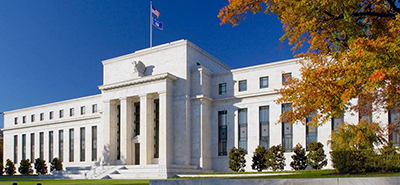
The Federal Reserve March 18 held interest rates steady, maintaining the federal funds rate in its current range of 3.5% to 3.75%.
“Ongoing turmoil in the Middle East has significantly increased uncertainty regarding the current and future state of the economy. The spike in oil prices has the potential to both accelerate inflation and weaken economic growth. Amid this uncertainty, the FOMC decided to hold rates steady at its March meeting and reiterated that they are attuned to risks on both sides of their dual mandate to keep the job market strong and prices stable,” said MBA SVP and Chief Economist Mike Fratantoni.
“The FOMC projections released after this meeting showed that the median member expects higher inflation in 2026. It also showed that little changed with respect to the economic growth outlook, which had been published in December. A growing number of FOMC members now expect no cuts–or at most, one–to the federal funds target this year, likely due to a more negative inflation outlook. This is a noticeable but predictable pullback from what had been published in December,” he continued. “Mortgage rates have moved up about a quarter percentage point in recent weeks as longer-term interest rates accounted for the increase in inflation and hence the reduction in the chance that Fed would cut further this year. We forecast that mortgage rates will range between 6% and 6.5% this year, and our latest weekly data show it’s trending towards the upper end of that range.”
Click here or see the FOMC’s full statement below:
Available indicators suggest that economic activity has been expanding at a solid pace. Job gains have remained low, and the unemployment rate has been little changed in recent months. Inflation remains somewhat elevated.
The Committee seeks to achieve maximum employment and inflation at the rate of 2% over the longer run. Uncertainty about the economic outlook remains elevated. The implications of developments in the Middle East for the U.S. economy are uncertain. The Committee is attentive to the risks to both sides of its dual mandate.
In support of its goals, the Committee decided to maintain the target range for the federal funds rate at 3‑1/2 to 3‑3/4%. In considering the extent and timing of additional adjustments to the target range for the federal funds rate, the Committee will carefully assess incoming data, the evolving outlook, and the balance of risks. The Committee is strongly committed to supporting maximum employment and returning inflation to its 2% objective.
In assessing the appropriate stance of monetary policy, the Committee will continue to monitor the implications of incoming information for the economic outlook. The Committee would be prepared to adjust the stance of monetary policy as appropriate if risks emerge that could impede the attainment of the Committee’s goals. The Committee’s assessments will take into account a wide range of information, including readings on labor market conditions, inflation pressures and inflation expectations, and financial and international developments.
Voting for the monetary policy action were Jerome H. Powell, Chair; John C. Williams, Vice Chair; Michael S. Barr; Michelle W. Bowman; Lisa D. Cook; Beth M. Hammack; Philip N. Jefferson; Neel Kashkari; Lorie K. Logan; Anna Paulson; and Christopher J. Waller. Voting against this action was Stephen I. Miran, who preferred to lower the target range for the federal funds rate by 1/4 percentage point at this meeting.
