

Servicing Industry Executives Talk M&As, Tech, Insurance
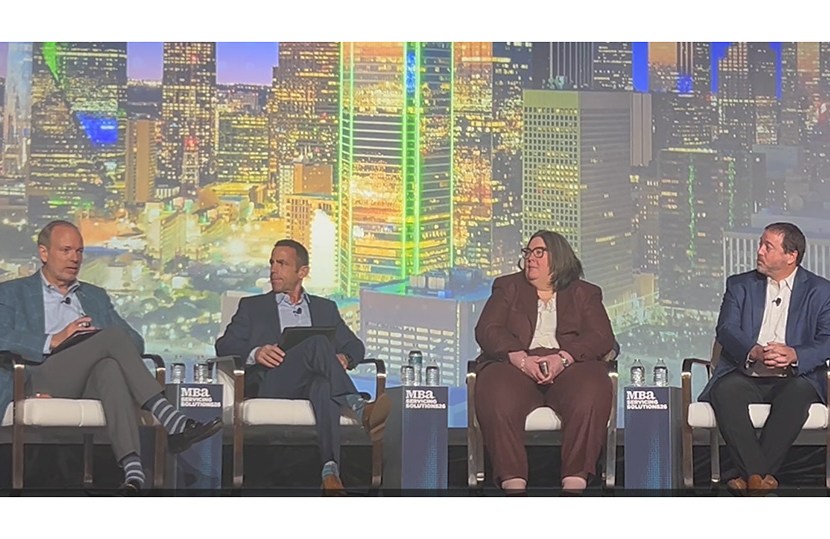
(From left: Bob Broeksmit, Jason Kwasny, Leslie Peeler and David Sheeler, by Anneliese Mahoney)
GRAPEVINE, Texas–Consolidation and acquisition have been big themes for the servicing industry–but will they continue? A panel titled “Leadership Lens–the Future of Servicing” at the Mortgage Bankers Association Servicing Solutions Conference and Expo attempted to tackle that question, and more, in a wide-ranging discussion Feb. 17.
One recent acquisition is that of Cenlar by PennyMac, which was announced earlier this month. Cenlar’s Leslie Peeler, executive vice president and chief operating officer, said that the response from clients has been favorable so far, and the deal is anticipated to close in the second half of 2026. Another recent major acquisition in the past year was Rocket Cos.’ purchase of Mr. Cooper in October.
With these large deals in mind, panel moderator Bob Broeksmit, CMB, MBA president and CEO, asked the panel what they expect moving forward.
“You’ll continue to see a lot of consolidation,” said Jason Kwasny, chief servicing officer at Servbank, saying it comes down to companies wanting to control the entire experience from start to end, particularly in the hopes of successful recapture.
Freedom Mortgage Corp.’s President of Residential Servicing David Sheeler said that he’s not necessarily expecting a flurry of acquisitions in 2026, and not all consolidation moving forward may be exclusively servicers or subservicers, pointing to opportunities with vendors and partners.
As for new technology in the servicing space more generally, Kwasny noted that servicing is a bit of a unique business. “They’re almost somewhat immune from the traditional forces around supply and demand,” he said. “There’s two things that you can’t pick in life. One is your parent. The other is your mortgage servicer.” That type of setup may just not garner the same consumer pressures to upgrade technology, he noted.
Sheeler said that it might be more of a resource question, but that he is seeing investment, including digital experience, workflow, data integration and artificial intelligence.
Speaking of AI, Broeksmit asked the panel what effect the buzzy technology stands to have on servicing.
“When you think about AI, how servicers should be considering this technology, it’s just like how you would consider any technology: What’s a problem that you’re trying to solve, or what’s the opportunity that you’re pursuing?” Peeler said.
Kwasny spoke about the importance of making sure that middle management is well trained on AI literacy. “Where your middle management goes in an organization, is where your organization goes. Whether that’s anything that you want to create […] or adopting new technologies such as AI, they are going to be the ones that determine whether it’s successful within the organization.”
Cybersecurity is also a big concern for servicing in the tech space, and it’s related to AI, too, the panelists noted. It has become a lot easier for nefarious actors to operate with those kinds of tools, Kwasny said.
And, insurance continues to impact the servicing sector, Broeksmit posed, but by how much?
“The increasing cost of insurance, the increasing access to insurance, is one item, but it’s not happening by itself,” Peeler said. “You’ve got a myriad of other issues that are happening at the same time that are impacting affordability.” She also noted that the impact varies widely by region.
“The muscle that we need to teach people in servicing today,” she said, “is probably a lot more like a social work mindset, in terms of helping people out and through all of these different things that are coming at them.”
Sheeler also pointed to compounding factors. “It’s that people already were stretching into these higher DTIs in order to get loans and the payment shock they can’t handle,” Sheeler said. But, he also noted these are still relatively small parts of portfolios.
And, Peeler noted the industry is used to these cycles. “If you look at the pattern, there’s always something,” she said, citing high inflation in the 1980s and the Great Recession. “It’s always related to affordability, whether it’s because of rates rising or costs rising, or whatever it is.”
